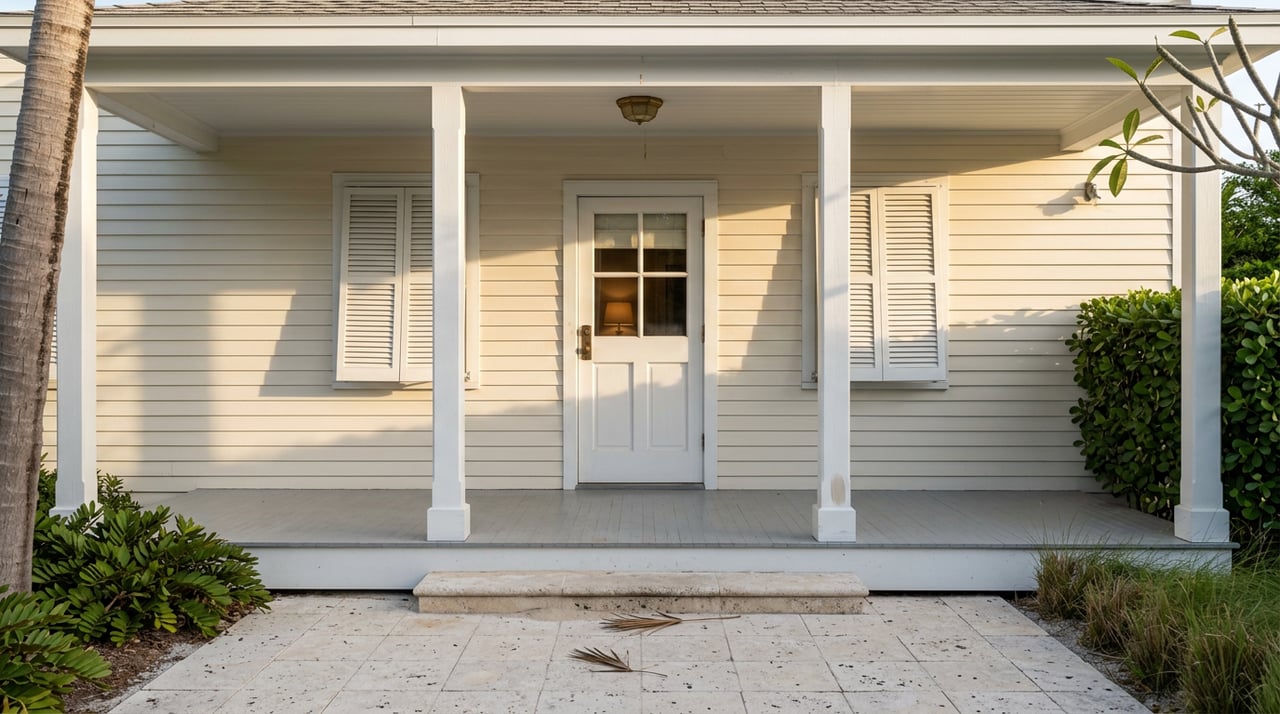
By early August, the beach in front of your house has already done most of its heavy work for the year. The mother turtles came ashore in waves through June and July, and the sand between Loggerhead Park and the northern town line is now dotted with hundreds of quiet, staked-off circles. Peak nesting is behind us. Peak hatching is not.
That shift changes what a good neighbor actually does. In June, the ask was mostly to stay out of the way while the females hauled up to lay. In August, the ask is more delicate: help the hatchlings find the ocean instead of your porch light. The rules sound familiar until you look at what's different this year.
The number that reframes the season
In 2025, researchers at LMC recorded a total of 20,871 sea turtle nests from leatherbacks, loggerheads, and green turtles. Spread that across a monitored strip that this season narrowed to 8.5 miles from 9.5 miles in previous years, with the Florida Fish and Wildlife Conservation Commission covering the remaining northern section, and the density on the sand you walk is roughly one nest for every two feet of beach. That is why the stakes and pink tape are everywhere. It is also why casual choices at home carry so much weight in August.
The other structural change is offshore. The recently expanded voluntary Sea Turtle Protection Zone now covers Palm Beach County's entire 45-mile coastline and extends one mile offshore. If your Saturday routine involves running out of the Jupiter Inlet and turning south, you are inside the zone the moment you clear the sea buoy.
What "peak" actually means in a Juno Beach August
The season officially runs March through October, but the local calendar has its own rhythm. Nesting season in Juno Beach lasts from March 1 to October 31, with the most nestings occurring throughout June and July. Loggerheads incubate roughly 50 to 60 days, which puts the biggest wave of hatch-outs squarely in August and early September, right on top of the last of the late nesters.
This year has already broken form. On Wednesday, February 11, Loggerhead Marinelife Center documented the earliest sea turtle nest ever recorded by the Center, signaling the start of what is expected to be another busy nesting season. Then in May, a genuinely rare visitor showed up:
"Likely due to rising ocean temperatures, we recorded the earliest sea turtle nest on record in the history of LMC's monitoring efforts today," said Justin Perrault, Vice President of Research at Loggerhead Marinelife Center.
Loggerhead Marinelife Center documented the first-ever Olive Ridley sea turtle nest in Florida on May 27, 2026. A species that usually nests thousands of miles away chose a stretch of Juno Beach sand. Whatever else you make of the season, it is not a routine one.
Your porch does more than the pier
The single most useful thing a Juno Beach resident can do in August has nothing to do with visiting the Center. It has to do with the wall of light your neighborhood throws at the water after sunset.
Hatchlings orient toward the brightest horizon. On a dark beach, that is the reflection of the moon and stars on the surf. On a bright beach, it is the coach light on a garage, a lit pool cage, or an uncovered TV visible through a slider. A disoriented hatchling burns through the energy reserves it needs to survive its first swim before it ever reaches the water.
The Center's list of what to do during hatching season reads like a maintenance checklist for a coastal home:
- Keep lights off at home while not in use and close your blinds at night to avoid adding to overall sky glow.
- Remove obstacles such as beach chairs, tables, water sport equipment, and umbrellas before dark.
- Enter the beach at designated access points and avoid walking on the dunes or beach vegetation to protect sea turtle nests, shorebird nests, and the dune plant ecosystem.
- If you see hatchlings on the beach, allow them to crawl to the ocean on their own; removing or digging hatchlings out of a nest is illegal.
The chair rule is the one most people miss. A folded umbrella left leaning against a dune bench is a wall for something the size of a bottle cap. A left-behind sand toy is a canyon. If you host on the sand this month, do a walk-through at dusk before you go inside.
Programs still open, and which one to actually do
Loggerhead Marinelife Center is offering a variety of educational and interactive programs during peak sea turtle nesting season this summer. Not all of them are equal for a resident. If you have already done the standard tour with visiting family in past summers, here is what still merits your August calendar:
| Program | What it actually is | Best for |
|---|---|---|
| Hatchling Discovery Program | Daytime session focused on the second half of the season, when nests are emerging | Residents who have done Turtle Walks already |
| Hatchling Releases | Occasional supervised releases of hatchlings recovered from disoriented nests | Families with kids, when timing lines up |
| Turtle Walks | Evening walks to observe late-season nesting attempts | First-timers and out-of-town guests |
| Tidal Tots | Toddler-scaled beach ecology sessions | Grandparents hosting young visitors |
Guests can participate in seasonal experiences through September, including guided Turtle Walks, the Hatchling Discovery Program, Hatchling Releases, Tidal Tots and Plastic Free July Community Action Day. The Turtle Walks are the ones the whole county talks about, but by August the Hatchling Discovery track is the one that reflects what is actually happening on the sand outside your door.
A note on the walks themselves: the Loggerhead Marinelife Center takes visitors on guided walks to see the nesting turtles in action from Tuesday through Saturday throughout June and July, and trips are usually around three hours long, starting at 9 p.m. Visitors are recommended to wear dark clothing to blend in with the night and must stay at least 30 feet away from any turtle activity. That 30-foot line applies to residents on our own beach too. If you come across a nesting female on an evening walk from the Pier back to Ocean Drive, it is not a photo opportunity.
If you take the boat out this month
The expanded protection zone is the piece most residents have not caught up on. Last season it was a shorter run of coast. This season it is the whole county, and it reaches a mile out.
Last year, LMC partnered with Gumbo Limbo Nature Center to expand its voluntary STPZ zone given the higher risk turtles face from boat strikes. The zone encourages boaters to travel at the slowest safe speed, wear polarized sunglasses, and remain alert to help reduce the risk of boat strikes, which pose a significant threat to sea turtles.
Practical translation for a Juno Beach dock owner: the stretch from the inlet down past Jupiter Reef Club and along the whole run to MacArthur is now in the voluntary slow zone. Polarized lenses are the piece captains skip. Turtles at the surface between roughly 8 and 11 a.m. read as a dark patch, not a shape, and the difference between seeing one and not seeing one is often the sunglasses on your face.
A resident's August weekend, honestly
The version of the weekend that respects the season and still feels like Juno Beach:
Early morning, walk out to Juno Beach Park, open from sunrise to sunset with soft sand, sweeping ocean views, and amenities like picnic areas, outdoor showers, and guarded swimming zones, and continue onto the Juno Beach Pier, a nearly 1,000-foot stretch into the Atlantic offering saltwater fishing and unforgettable sunrise views. The tide chart matters more than the clock; low tide exposes the wash line where hatchlings that emerged overnight sometimes strand. If you find one, do not pick it up. Note the location and call the Center.
Midday, spend an hour inside the exhibit hall at Loggerhead Marinelife Center, which long-time Juno Beach resident Eleanor Fletcher started more than 40 years ago. The Center is open seven days, 10 a.m. to 5 p.m. If you have not been in since the last renovation, the patient yard has changed.
Late afternoon into evening, run the loop through Juno Dunes Natural Area and then home before dusk. Turn off the landscape uplights on the ocean side of the house. Draw the blinds on any west-facing room that throws light onto the dune. Bring the umbrellas up.
That is the whole ask. It is small, and August is exactly when it matters.
A quieter way to know your market
Living well in a place like this is a long game. The habits that make a beach block work in August are the same ones that make a home here hold its character for decades. When you are ready to think about your own footprint on this stretch of coast, whether that is a first purchase, a move up the road, or a quiet sale that respects the neighborhood you helped build, Robert Floyd Realty would be glad to talk. Let's Connect.